Emotional Intelligence Isn’t What You Think
Most people don’t realize they’re emotionally reactive until pressure exposes them. This page is built to help you spot the signs, understand your emotional patterns, and move from unconscious reaction to a stronger, more intentional response.
You don’t really know your emotional intelligence until life presses on it.
A lot of people think emotional intelligence means being “nice,” staying quiet, or calming down after the damage is already done. But real emotional intelligence shows up before the reaction takes over.
It’s the ability to notice what you’re feeling, understand what’s driving it, and choose a response that protects your peace, your relationships, and your long-term direction.
Why This Matters
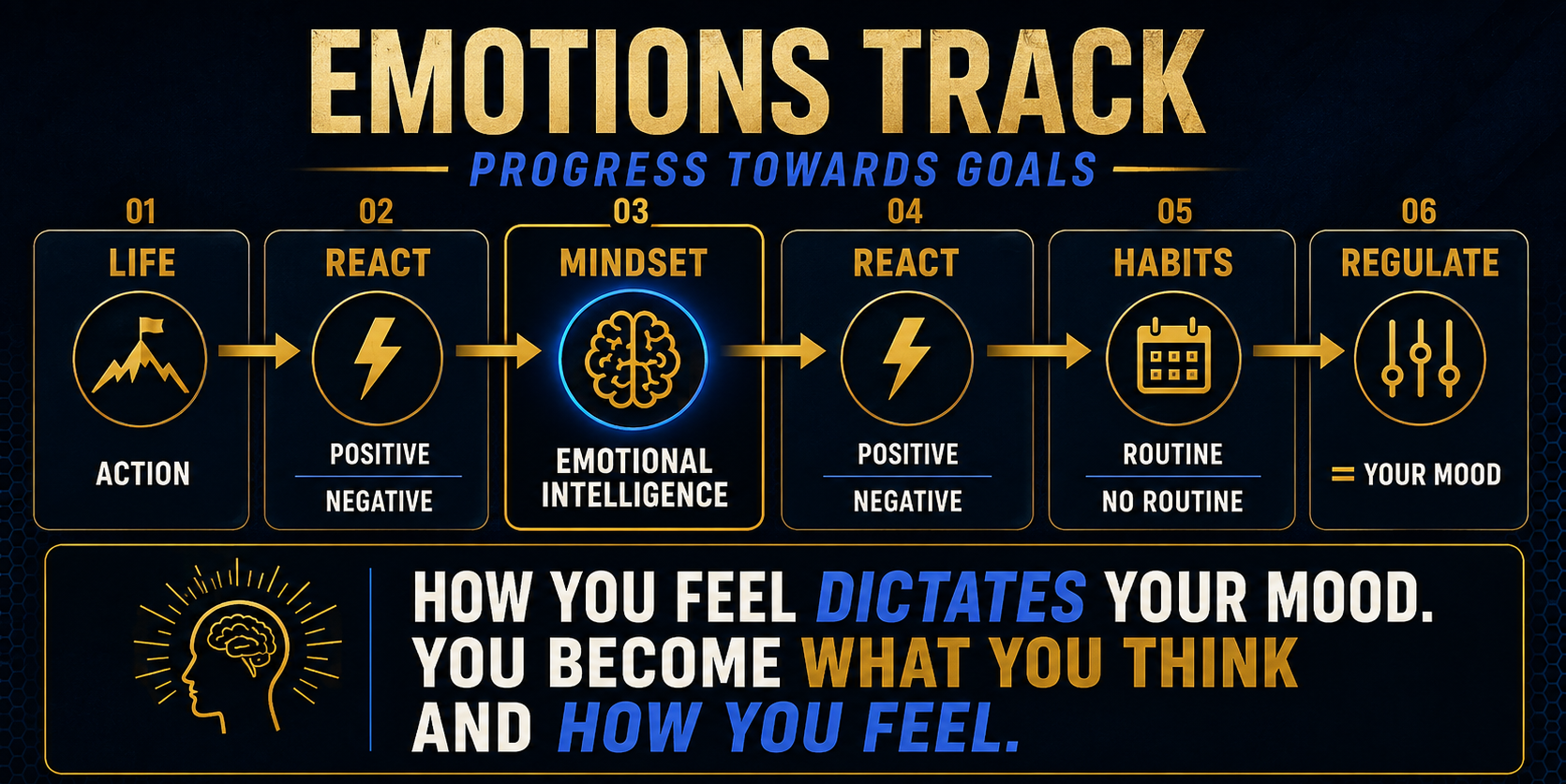
EQ is the ability to recognize, evaluate, and manage emotions so you can respond thoughtfully instead of reacting impulsively, and it already centers three key phases: emotional response, self-awareness and reflection, and emotional regulation and management.
The Hidden Cost of Low EQ
- You say things you didn’t mean and spend energy repairing the damage.
- You confuse intensity with truth and assume the first feeling should lead.
- You make decisions from anger, fear, shame, pressure, or ego.
- You repeat the same conflict patterns in relationships, work, and leadership.
- You think you have “bad luck,” when really your reactions keep creating the same outcomes.
What High EQ Actually Looks Like
- Noticing what you’re feeling before the emotion hijacks the moment.
- Separating what happened from the story you instantly told yourself.
- Recognizing patterns, triggers, and old beliefs that keep replaying.
- Using simple regulation tools to slow down your body and thinking.
- Choosing a response that matches your values instead of your impulse.
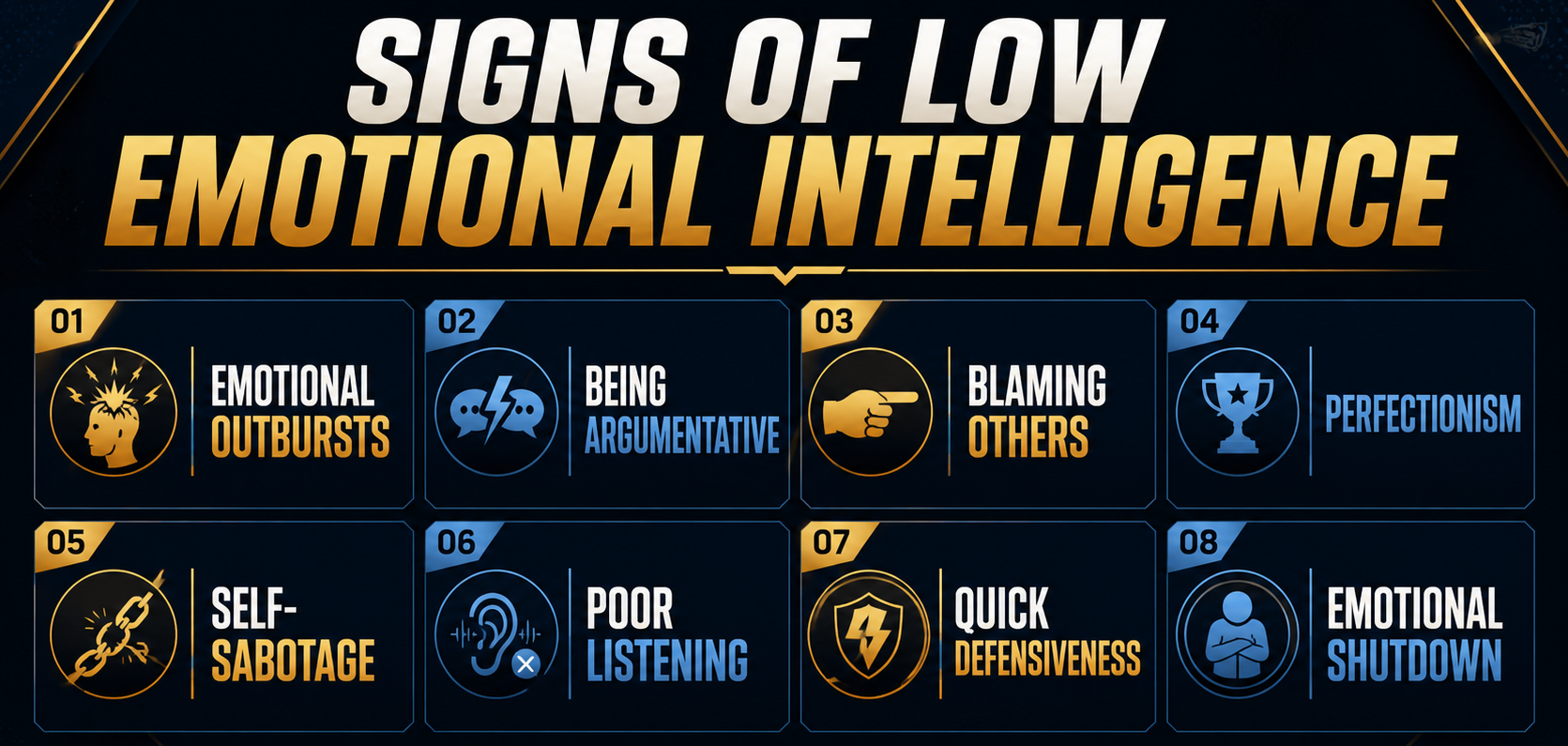
Signs of Low Emotional Intelligence
These signs don’t mean you’re broken. They mean pressure is getting your first move too often.
1. Quick Defensiveness
You hear feedback and instantly protect yourself instead of listening for what may be true.
2. Reacting Fast
You text back angry, interrupt, raise your voice, slam the door, or make a decision before your body has calmed down.
3. Emotional Shutdown
You go cold, disappear, avoid the conversation, or tell yourself “I’m fine” when you’re clearly not.
4. Blame First
Your first instinct is to locate fault outside yourself instead of asking what part your interpretation played.
5. Poor Self-Awareness
You feel something strongly but can’t clearly name the emotion, the trigger, or the belief behind it.
6. Low Empathy
You stay locked in your own perspective and miss what the other person may be feeling or hearing.
7. Mood-Based Decisions
Your discipline, words, and standards rise or fall depending on how emotional the moment feels.
8. Conflict Loops
You keep having the same arguments, same workplace tension, or same relational breakdowns with different people.
9. Numbing Instead of Processing
You scroll, drink, overwork, isolate, binge, or distract yourself instead of understanding what the feeling is trying to show you.
The Updated Flow Chart
Below is the clearer visual system: first the unconscious reaction loop, then the Mogressive emotional intelligence response flow.
The Unconscious Reaction Loop
- Trigger: Something hits your ego, fear, stress, or insecurity.
- Assumption: You instantly create a story about what it means.
- Emotion Spike: Anger, shame, anxiety, sadness, frustration, or panic rises fast.
- Reaction: You snap, defend, avoid, shut down, overthink, or numb out.
- Damage: The relationship, decision, and self-trust take the hit.
The Mogressive Response Flow
- Trigger: Notice the moment instead of becoming the moment.
- Identify: Name the emotion clearly.
- Assess: Rate the intensity and what’s actually happening.
- Recognize: Spot the thought, belief, or pattern attached to it.
- Respond: Choose the next move that aligns with your values.
Trigger
A comment, delay, disrespect, memory, or stressful event activates you.
Identify The Emotion
Name it directly: anger, shame, fear, sadness, frustration, jealousy, guilt, or overwhelm.
Assess The Intensity
Ask: How strong is this from 1–10? Am I calm enough to respond well right now?
Recognize The Story
What thought, assumption, fear, or belief is attached to this feeling?
Reflect
Is this about the current moment only, or is it also touching an older wound, pressure, or pattern?
Regulate
Breathe, pause, step away, write, ground yourself, or delay the response until your thinking is stronger.
Choose The Response
What would protect truth, peace, boundaries, and long-term outcomes here?
Review The Pattern
What did this moment reveal about you, your triggers, and what you still need to work on?
The Mogressive 3-Step Method
Step 1: Emotional Response
Notice the emotional moment early. Identify what you feel, assess the intensity, and recognize the thought attached to it.
Step 2: Self-Awareness & Reflection
Ask why this emotion showed up. Explore the trigger, the belief, the past pattern, and what this moment is really touching.
Step 3: Regulation & Management
Use practical tools to slow yourself down, challenge the first unhelpful thought, and choose a response you can respect later.
What This Looks Like in Real Life
Emotional intelligence matters most in the moments that test your ego, patience, and self-control.
Relationship Example
Your partner says, “You haven’t really been present lately.” Low EQ hears attack and gets defensive. Higher EQ pauses, notices the shame or frustration, and asks, “What part of that is true, and how do I want to respond?”
Work Example
Your boss gives critical feedback. Low EQ shuts down or argues fast. Higher EQ identifies the emotional spike, separates feedback from identity, and uses the moment to improve instead of react.
Personal Growth Example
You miss a goal or break your routine. Low EQ spirals into “I always mess up.” Higher EQ catches the thought, regulates the shame, and asks, “What happened here, and what’s my next strong move?”
Quick Self Check
Use this to help people stop assuming they’re emotionally intelligent just because they mean well.
Emotional Intelligence Indicator Check
| Question | Often | Sometimes | Rarely |
|---|---|---|---|
| Do I realize what I’m feeling before I speak or act? | |||
| Do I get defensive quickly when I feel criticized? | |||
| Can I clearly name the trigger behind my reaction? | |||
| Do I confuse strong emotion with being right? | |||
| Do I repair conflict well, or keep repeating the same emotional loop? | |||
| Do I know how to regulate myself before responding to pressure? |
Closing Message For The Page
Emotional intelligence isn’t proven when life is easy. It’s proven when you’re disappointed, disrespected, delayed, embarrassed, triggered, misunderstood, or under pressure.
That’s why this matters so much. A man can think he’s strong because he works hard, stays moving, and keeps life going. But if he still reacts unconsciously, avoids what he feels, or damages peace every time pressure rises, then there’s more work to do.
The good news is this: emotional intelligence can be built. Awareness can be trained. Regulation can be practiced. Better responses can become your new standard.
You don’t need to be perfect. You need to become more honest, more aware, and more trustworthy with what you feel.
Explore More Mogressive
If this page exposed something, don’t stop at awareness. Build the next layer of your system.
Find Your Stuck Type
Take the free Mogressive quiz and identify the pattern that may be driving your reactions, habits, and pressure right now.
The 1 Approach System
Learn the Mogressive framework for turning awareness into learning, reflection, communication, and real change.
Free Courses for Men
Go deeper into emotional control, habits, awareness, leadership, confidence, and self-regulation with practical exercises.
6-Week Jumpstart
Build a stronger foundation around values, goals, routines, emotional regulation, and self-leadership.
Life Coaching With Coach Mo
Work directly with Coach Mo to build a practical system for emotional control, structure, confidence, and direction.
Book A Call
If you’re ready to stop reacting and start leading yourself with more awareness, book a conversation and build the next move.